Mehdi Khadraoui
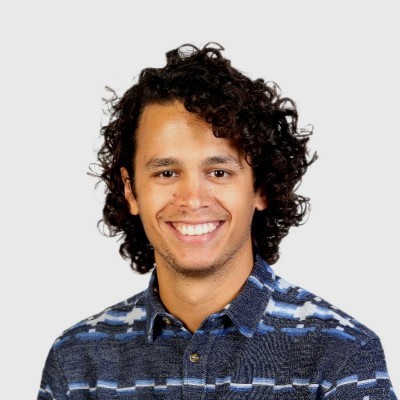
Bio:
Mehdi did a bachelor in biology at the University of Lausanne, and at the University of British Columbia. He then did the Erasmus Mundus Master in Evolutionary Biology (MEME), during which he spent four semesters in different institutions: the University of Groningen, the University of Munich, Harvard University, and Monash University. During his last months in the program, he strengthened his interest in science communication. After another year of research, he switched gears to work full-time in science communication at the European Molecular Biology Laboratory. He is now a Communications Officer at the Research Institute of Molecular Pathology in Austria.
Q: When did you know you wanted to work in academia / work outside of academia?
A: During my Master’s in evolutionary biology, I already had strong uncertainties about my future in academia. Although I loved the program and some aspects of academic research, something didn’t quite fit. When I started a lab rotation for a PhD position, I quickly realized I couldn’t go on : I didn’t find it stimulating enough. After much thinking and a massive change in my frame of mind, I decided to quit to explore science communication, which I thought was a lot more thrilling.
Q: Is there a piece of advice you can offer about creating a CV?
A: Adapt your CV for every application: pay attention to detail – what do your potential employers want, and how can you highlight parts of your experience to make it a good fit?
Q: Do you regret your degree or is there another path you could have taken to be where you are?
A: I do not regret my degree at all, it was the most formative time of my life and I have met extraordinary human beings. There are many ways to becoming a science communicator, but I like mine the way it is.
Q: Which skills do you most rely on in your current job? Where did you learn these (eg. university, work experience, extra curricular activities, self-taught)?
A: Creativity, adaptability, and attention to detail. In my opinion, creativity is part innate, part trained, and comes from your passion in doing what you do. The more you have to create, the more you develop your skills. My adaptability definitely comes from my international education – you learn to work with people with very different backgrounds and expectations. Attention to detail is something I’ve always had, but I am sure you can develop it.
Q: What were your first steps after graduating?
A: Applying for a PhD position, because I was scared I would end up jobless. It was probably a mistake!
Q: In your opinion, what does it take to be a good science communicator? Do you have any advice for up-and-coming (or accomplished!) scientists when communicating their work?
A: Unconditional love of science, the curiosity to learn about topics you don’t find appealing, the ability to see the world with someone else’s eyes. Communicating your work is extremely important, but the main questions you need to ask yourself is: who should know about my work, and how can I best address them?
Q: What do you feel are the main goals of science communication within the context of your work?
A: Within my work, the main goals are to promote the institute to the scientific community and increase our visibility to the public.
 Naturally Speaking